





special fearure・column
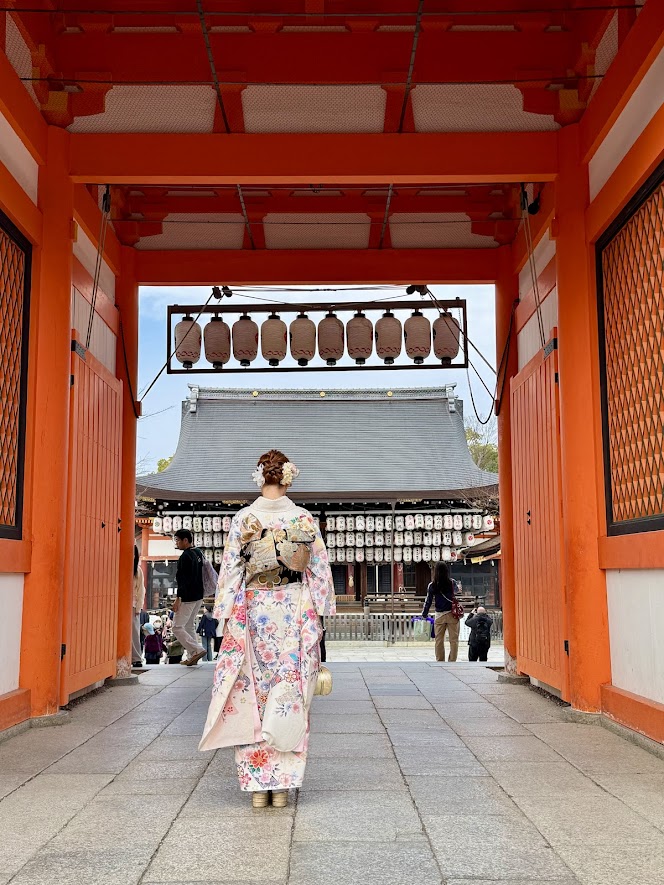
**Hidden Gems of Yasaka Shrine ⛩ Topics You Might Not Know**
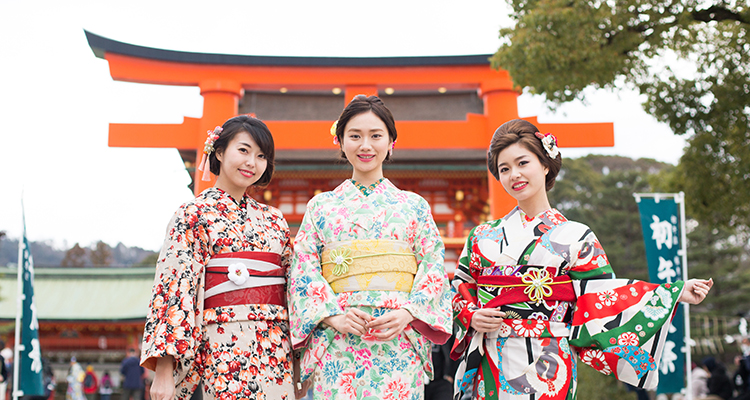
If You’re Going to Enjoy Gion Sightseeing in Kyoto, Kimono Is the Way to Go
Yasaka Shrine is one of Kyoto’s most well-known sightseeing spots.
Located in the heart of Gion and easily accessible from Shijo Street, it is a shrine that’s easy to visit even on a first trip to Kyoto.
However, Yasaka Shrine is far more than just a place you visit “because it’s famous.”
By learning a little about its history, the origins of its grounds, and the beliefs behind its worship, your visit takes on much deeper meaning—and even the way you take photos may change.
In this article, we’ve gathered some “lesser-known topics about Yasaka Shrine” that are often only briefly mentioned in guidebooks, presented in a way that highlights Kyoto’s unique charm.
Reading this before heading out for a kimono stroll through Kyoto is sure to make your walk around Gion even more enjoyable.
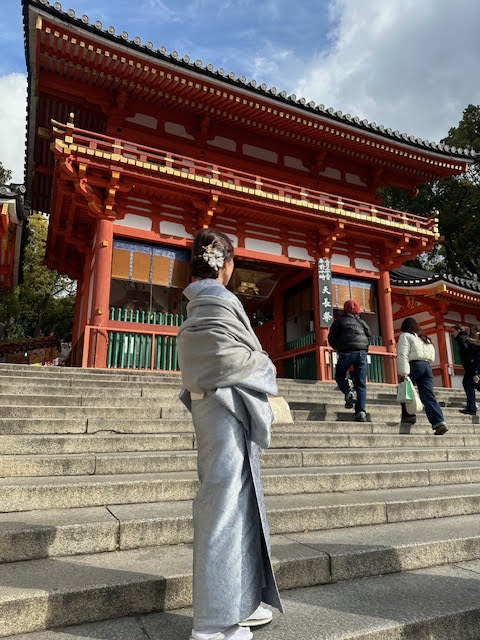
Yasaka Shrine Was Originally More a Place for Purification Than for Making Wishes
Yasaka Shrine is widely known for warding off misfortune and protecting against epidemics.
This is no coincidence—the core of its faith lies in the idea of “purifying impurities and keeping calamities at bay.”
While Kyoto is an ancient capital, it has also long been a place of constant movement, and in the past, outbreaks of disease were not uncommon.
In such times, Yasaka Shrine served as a spiritual refuge where people could calm their minds and bodies and regain a sense of balance before returning to daily life.
Seen from this perspective, visiting the shrine is not only about “making wishes come true,” but also about
“resetting oneself and making a fresh, positive start.”
That may be why stopping by Yasaka Shrine at the beginning of a journey or at a personal turning point brings such a clear and settled feeling—it is rooted in this very history and belief.
2) Yasaka Shrine’s Main Hall Has a Surprisingly Rare Design and Orientation
Many people have heard that most Shinto shrines face south.
Facing south allows buildings to receive sunlight directly, and for centuries this orientation was considered the standard in shrine architecture.
However, Yasaka Shrine does not follow this convention.
The main hall of Yasaka Shrine faces west, not south.
Its front does not open toward the mountains, but toward Shijo Street and the town of Gion.
This orientation is neither accidental nor a playful design choice.
Yasaka Shrine stands at the heart of Gion and has long been deeply connected to the everyday lives of the people.
Its festivals and acts of worship were never confined to a secluded mountain setting—they were always intertwined with the flow of the town.
Because of this, priority was given to movement and accessibility:
Visitors can enter the grounds directly from Shijo Street
The approach functions as an extension of the town itself
The shrine naturally receives the flow of people
To achieve this, the main hall was intentionally oriented westward, toward the town.
As you walk through the grounds, try keeping these points in mind:
Why does the shrine’s front face the town rather than the mountains?
How does the layout gently guide you toward the main hall no matter where you enter?
How worship here feels like an extension of daily life rather than a separate, special act
Yasaka Shrine is designed so that
you don’t feel like you are “going to visit a shrine,”
but rather that “you were walking through town and naturally found yourself inside one.”
When you pay attention to the orientation of the buildings, Yasaka Shrine reveals itself not just as a tourist destination, but as a presence that has protected Kyoto and lived alongside the town itself.
Next time you visit, walk the grounds with this perspective in mind:
a shrine that faces west, embracing the town it watches over.
3) “Gion” Is Both a Place Name and an Atmosphere of Faith
Although Gion is now widely known for its stone-paved streets, traditional townhouses, and maiko culture,
the name “Gion” did not originally come from a place name.
Its origin lies in the faith of Yasaka Shrine.
Yasaka Shrine was once called Gion-sha (Gion Shrine).
The word Gion is derived from Gion Shōja (Jetavana), a sacred Buddhist site in India,
and is deeply connected to beliefs in warding off epidemics and misfortune.
In Kyoto, when epidemics spread, people would
pray at Gion-sha
hold the Gion Goryō-e (which later became the Gion Festival)
to protect the entire city.
In other words:
👉 the area around Yasaka Shrine became the center of Gion faith
👉 over time, the district where Gion-sha stood came to be called “Gion” itself
This is how the name was born.
Why the atmosphere still feels special today
Gion feels “so Kyoto-like” not only because of its beautiful scenery.
This land holds centuries of accumulated history:
prayers for protection from disease,
the memories of townspeople who supported the Gion Festival,
and a time when shrines and daily life were deeply intertwined.
When you walk from Hanamikoji toward Maruyama Park and suddenly feel the streets grow quieter,
it is because of these layers of history and belief.
Gion was born from the faith surrounding Yasaka Shrine and grew together with the town.
That is why even today, Gion retains a certain quiet tension and a uniquely Kyoto-like atmosphere.
4) Yasaka Shrine Reveals a Different Face at Night
Yasaka Shrine is open for worship 24 hours a day, which means it offers a charm that feels quite different from the daytime.
During the day, the shrine is lively and bright, making it easy to take cheerful, well-lit photos.
At night, however, the flow of people slows, and the interplay of lantern light and shadows brings out the depth and contours of the shrine grounds.
If you are visiting in a kimono, the calm atmosphere of the evening is especially complementary—it highlights texture and movement rather than bold showiness.
Light-colored kimono appear soft and gentle under the lights, while darker or monochrome styles look refined and mature.
In Gion at night, your way of walking and quiet presence become part of the scenery, which makes Yasaka Shrine an ideal starting point for an evening stroll.
5) Utsukushigozen Shrine Focuses More on “Balance and Refinement” Than Simply “Becoming Beautiful”
Utsukushigozen Shrine, located within the grounds of Yasaka Shrine, is well known for its blessings related to beauty and is especially popular among female visitors.
However, the “beauty” spoken of here does not simply mean becoming outwardly beautiful.
To arrange one’s appearance is to arrange one’s mind.
Fixing your hair, adjusting your clothing, and standing with good posture—
the atmosphere of Utsukushigozen Shrine naturally draws attention to the importance of these fundamental gestures.
In Kyoto, a sense of awareness such as
choosing colors and materials appropriate to the season
dressing in a way that suits the place
has long been woven into everyday life.
The quiet presence of Utsukushigozen Shrine closely reflects these Kyoto values.
That is why it is a place that pairs especially well with visiting in kimono.
Neaten your hairstyle
Straighten your collar
Be mindful of your steps as you walk
By behaving just a little more carefully than usual,
you begin to feel as though you are aligning yourself with the atmosphere of Kyoto itself.
This is not so much about dressing to look beautiful,
but rather about grooming yourself as a way of showing respect for the place.
A visit to Utsukushigozen Shrine is both a wish to “be more beautiful”
and a moment to reflect on one’s own conduct.
Standing quietly in the shrine grounds while wearing a kimono,
your posture straightens and your movements naturally change.
Perhaps that quiet transformation is the true “beauty”
that Utsukushigozen Shrine seeks to convey.
6) Yasaka Shrine Becomes Far More Fascinating When You Understand It Through Its Rituals and Festivals
When people hear the name Yasaka Shrine,
many immediately think of the Gion Festival—Kyoto’s most famous summer event.
However, the true essence of the Gion Festival cannot be captured by the phrase “a lively festival” alone.
The Gion Festival began as a prayer to ward off epidemics
The origins of the Gion Festival lie in prayers offered during times when epidemics spread through the city.
People turned to the deities of Yasaka Shrine, praying for
protection from disease
peace and safety for the town
The rituals created to embody these prayers eventually became the Gion Festival.
In other words, the Gion Festival is an expansion of Yasaka Shrine’s core belief in purification—
a faith that spread beyond the shrine grounds to cleanse and protect the entire city of Kyoto.
It is a ritual that has never been confined to the shrine alone, but one that has always embraced the city itself.
Feeling the Gion Festival beyond summer
Although the Gion Festival takes place in summer,
its presence can be felt throughout the year within the grounds of Yasaka Shrine.
By paying a little attention to information boards or explanations at the shrine office,
you may begin to sense that
“the scenery before me is connected to the Gion Festival.”
The portable shrines, ritual objects, and even the terminology related to festivals
quietly convey the beliefs that form the foundation of the Gion Festival.
A shrine best understood through its rituals
Yasaka Shrine is not a place that can be fully understood at a single visit.
By learning about its seasonal rituals and the flow that leads to the Gion Festival,
your understanding gradually deepens.
Even if you do not visit in summer,
simply walking through the grounds with the awareness that
“this is a place born from prayers to protect the town”
will change the way Yasaka Shrine appears to you.
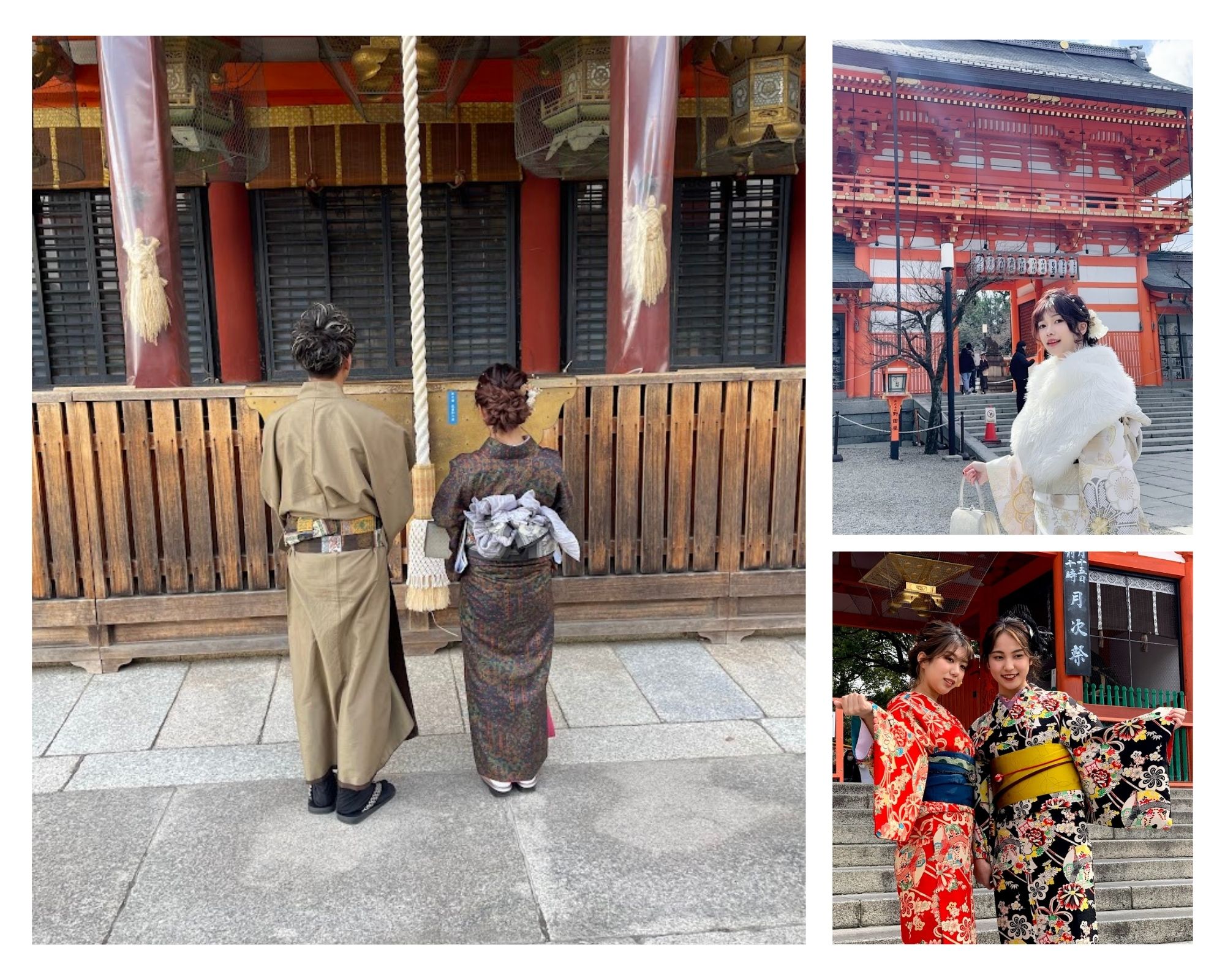
7) Focusing Only on the West Gate (Seirōmon) for Photos Is Missing Out
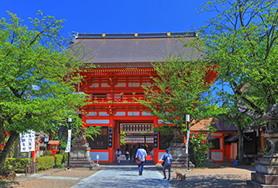
Yasaka Shrine’s West Gate (Seirōmon) is iconic and a very popular photo spot.
However, stopping after just one photo there would be a missed opportunity.
A great approach is to explore different areas with distinct atmospheres, such as:
the gates, the approach paths, the area around the main hall, and the quieter corners of the shrine grounds.
When the atmosphere captured in a photo changes, even the same shrine can create completely different impressions.
This is especially true when wearing a kimono—the texture and mood of the background make a noticeable difference.
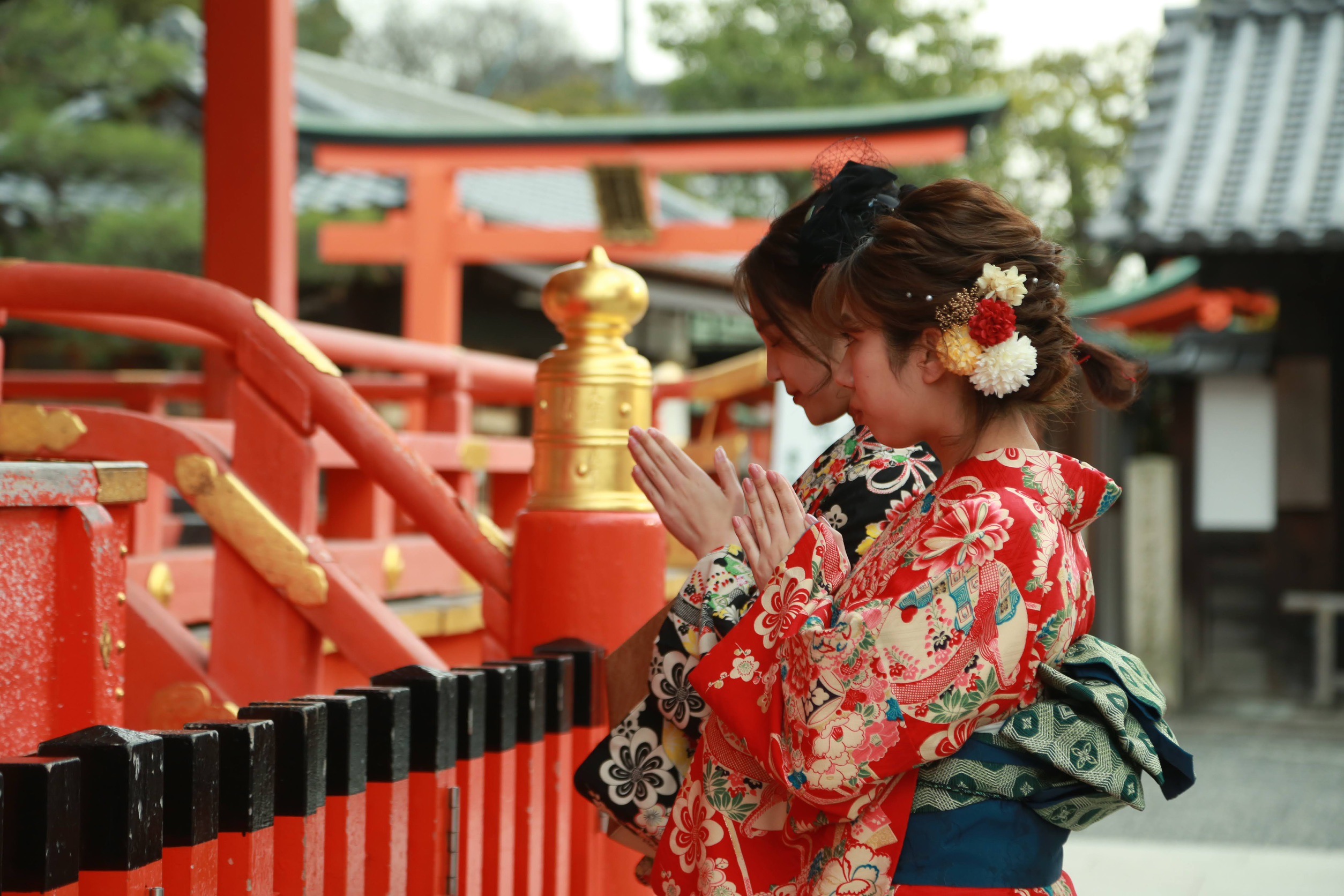
The vermilion gate creates a bright, elegant look,
shaded areas beneath the trees offer a calm and refined feeling,
and stone-paved paths evoke a distinctly Kyoto atmosphere.
Yasaka Shrine is a place filled with backgrounds that naturally bring out the many expressions of a kimono.
8) Yasaka Shrine Is the Hub of Gion Strolls—Which Is Why It Pairs So Well with Kimono
Yasaka Shrine is not only located at the heart of Gion, but also serves as a natural gateway to many surrounding sightseeing routes.
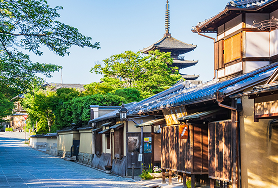
From here, it is easy to continue on to Hanamikoji Street, Maruyama Park, Nene-no-Michi, Ninenzaka and Sannenzaka, and even toward the Kiyomizu-dera area—creating an uninterrupted flow of classic Kyoto scenery.
In other words, it is an area where visually striking spots for walking in kimono appear one after another.
When exploring Kyoto in rented kimono, ease of movement greatly affects overall satisfaction.
Because so many highlights are concentrated within walking distance,
the area around Yasaka Shrine is especially well suited for strolling in kimono.
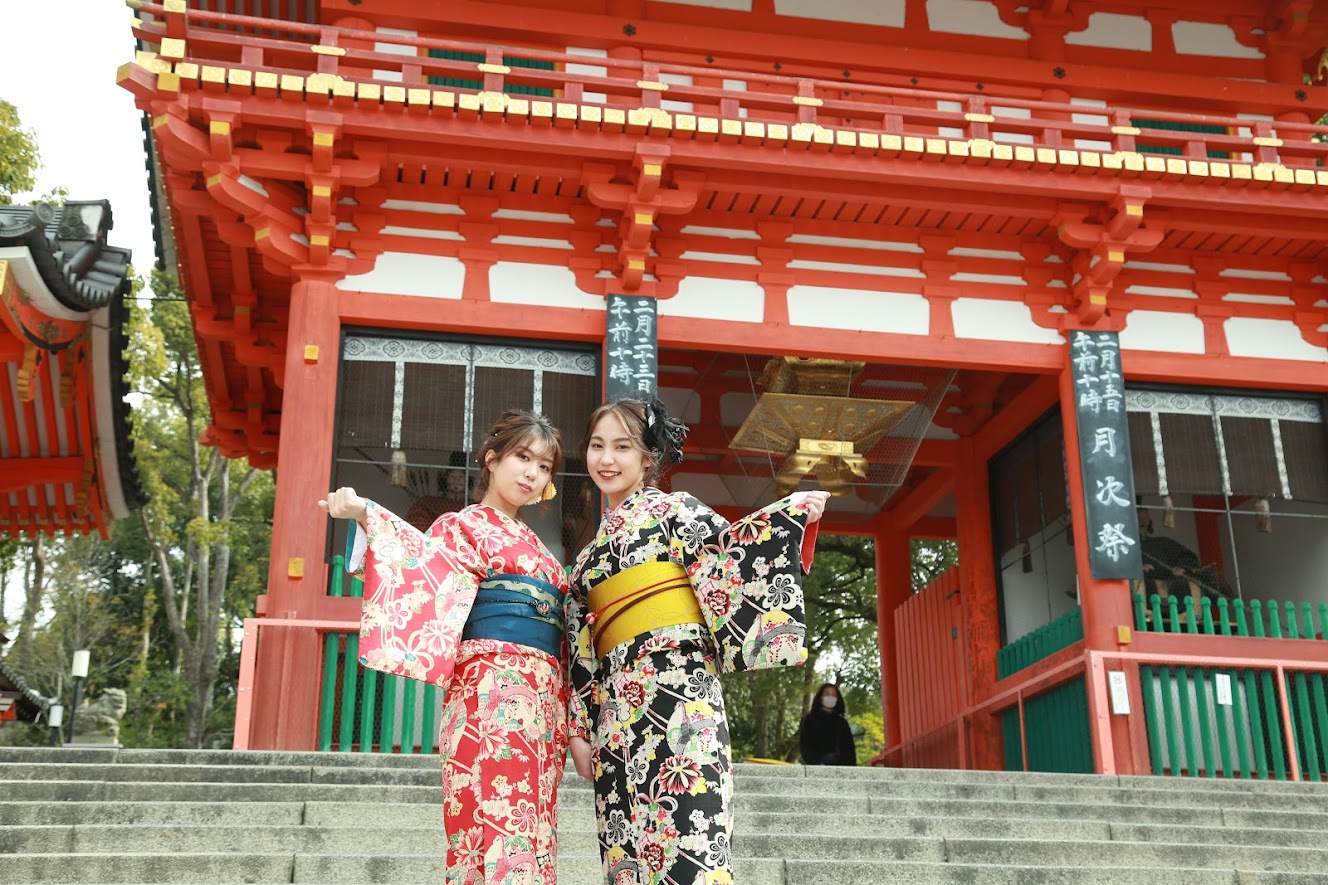
Enjoy a Worry-Free Kyoto Stroll in Kimono with Rental Kimono Okamoto When Visiting Yasaka Shrine
The Yasaka Shrine and Gion area are among Kyoto’s most iconic strolling routes where kimono truly feel at home.
To make the most of the experience, choosing a place with beautiful dressing, reliable hair styling, and easy returns can make your day far more comfortable and enjoyable.
At Rental Kimono Okamoto, everything from kimono dressing to hair styling is handled smoothly, and flexible return options are one of our key features.
Depending on your plans, you can choose from hotel return, return to a different branch, or next-day return, allowing you to enjoy sightseeing without feeling rushed.
After exploring Gion and Yasaka Shrine in kimono, you can return your outfit in a way that fits your schedule—giving you more freedom in how you move through the city.
Rather than seeing Yasaka Shrine as simply a place to pray, try experiencing it as a place to pause, reset, and connect with the atmosphere of Kyoto.
Walking through Gion in kimono adds a quiet sense of elegance, making Kyoto feel just a little more special than usual.
Website: www.okamoto-kimono.com
Instagram: @rentalkimonookamoto
TikTok: @rentalkimono_okamoto
Facebook: Rental Kimono Okamoto
X (formerly Twitter): @okamotokimono
Lit.link: lit.link/rentalkimonookamoto



You can read a feature story about our store, Kyoto and kimono.

We are introducing various information on proper way of choosing kimono and others to match. Also you can access to our articles about regional, sightseeing information of Kyoto you can refert to before travelling to Kyoto.
You can read articles about various information on Kyoto.
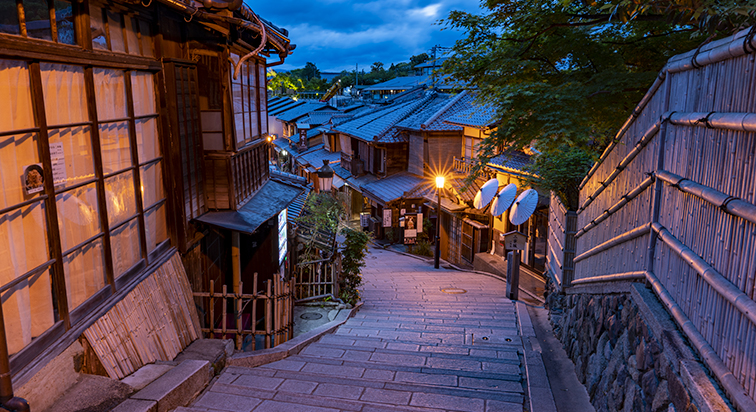
Our kyoto resident staffs post articles about history, sightseeing, regional information of Kyoto. You may enjoy sightseeing even more by deepening your knowledge through this article.
You can view articles about kimono all written by us.
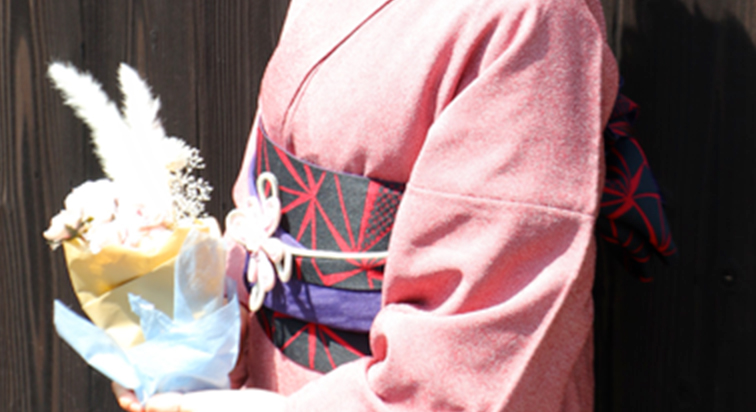
It features various articles about kimono such as history, manner, common sense and a proper way of matching kimono. They will add fun to your going out in kimono.
More articles introducing the area around the shop are available here.
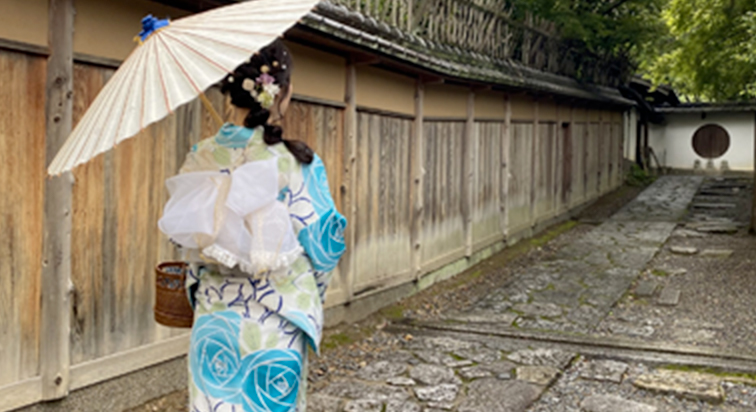
Please refer to our articles about famous tourist spots, hidden spots, and the latest information on stores in Kyoto. It is updated by our staffs who are familiar with the area.